

If you are wondering what causes a roof leak after heavy rain in Garner NC, the problem often comes from damaged shingles, worn flashing, clogged gutters, or cracked seals around roof openings. This guide covers the most common causes, the signs to watch for, and what you should do before the next storm.
Key Takeaways:
|
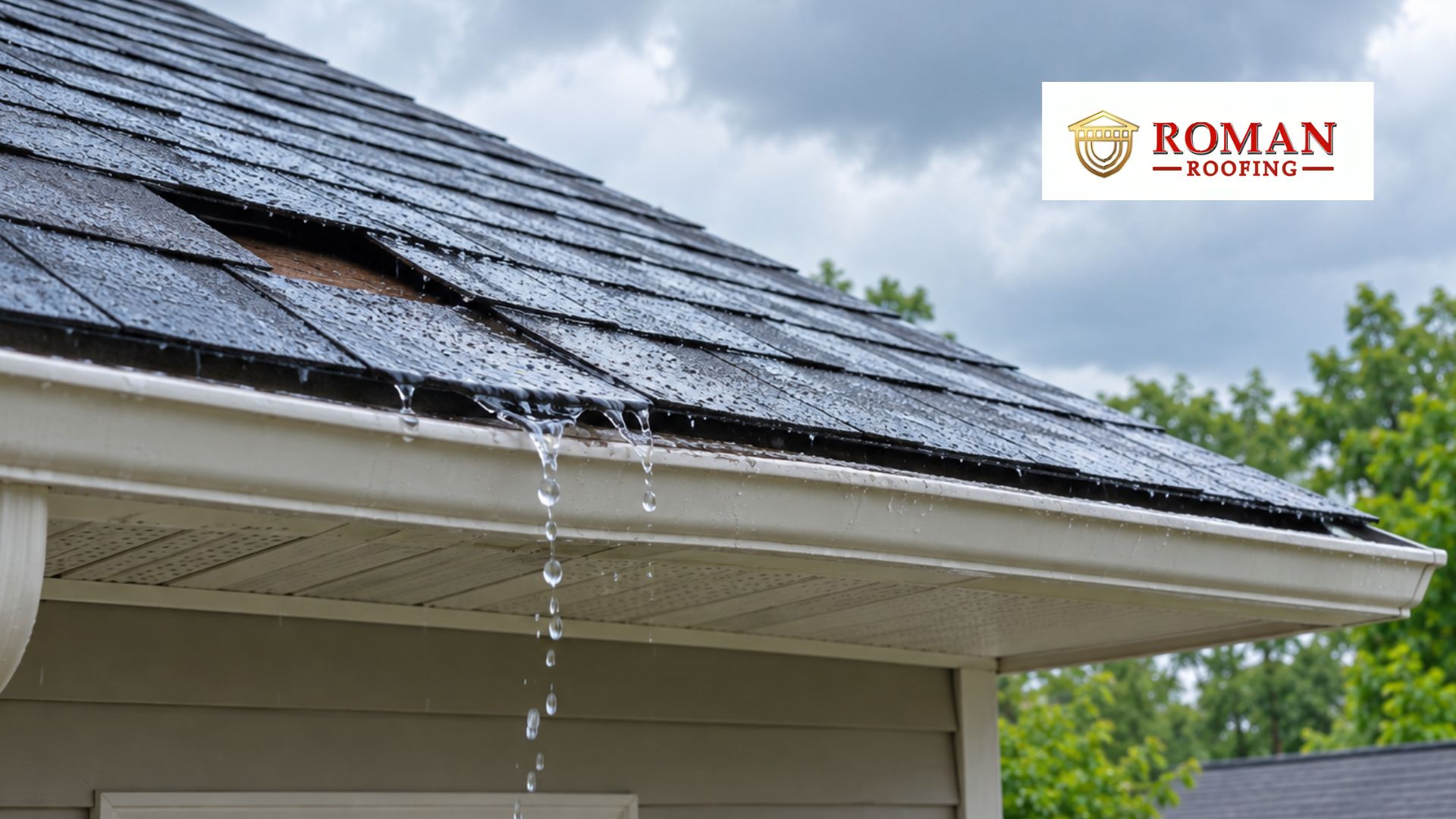
What Causes a Roof Leak After Heavy Rain in Garner NC?
Heavy rain sends a large amount of water across your shingles, valleys, and gutters. If part of that system is damaged or blocked, water may find a way beneath the roofing materials and into your home.
1. Damaged or missing shingles
Cracked, curled, loose, or missing shingles leave the materials beneath them exposed. A shingle may loosen during a windy Garner storm but not leak until the next heavy rainfall pushes water underneath it.
2. Loose or worn flashing
Flashing is installed around chimneys, skylights, vents, and other roof openings to keep water out. If it rusts, bends, or separates from the roof, wind-driven rain can slip through the gap and reach your attic.
3. Clogged gutters
Leaves, pine needles, and shingle granules can block your gutters and prevent water from draining. During a Garner, NC, downpour, backed-up water may spill behind the gutter, soak the fascia, or move beneath the roof edge.
4. Worn roof valleys
Roof valleys are the channels where two sloped roof sections meet, so they carry a lot of runoff during storms. Damaged shingles, worn flashing, or trapped debris in a valley can allow water to collect and enter the roof.
5. Cracked pipe boots
Rubber or metal boots seal the area around plumbing vent pipes. Sun exposure and age can make these boots crack or pull away from the pipe, leaving a small opening that may leak during steady rain.
6. Chimney or skylight problems
Chimneys and skylights depend on proper flashing and seals to keep water out. Cracked sealant, loose flashing, damaged masonry, or debris around a skylight can create leaks during wind-driven rain.
7. An aging roof
Older shingles lose granules and become brittle, while seals and flashing weaken over time. Your roof may look fine from the ground but still struggle to keep out water during a long, heavy storm.
How Can You Find the Source of a Roof Leak?
Learning what causes a roof leak after heavy rain in Garner NC can be difficult because water rarely travels straight down. It may enter near a vent, move along the decking or a rafter, and finally drip several feet away.
Signs inside the attic
Use a flashlight to look for damp wood, dark stains, rusty nails, wet insulation, or mold-like spots. Pay close attention to areas below valleys, vents, chimneys, and skylights, but avoid walking on unsupported insulation.
Signs inside your home
Look for brown ceiling stains, bubbling paint, soft drywall, musty smells, or water near ceiling fixtures. A mark that grows after each storm is a strong sign that moisture is still entering somewhere above it.
The leak might not appear during every rainfall. Light rain may drain away normally, while strong wind or a longer downpour pushes water into the damaged area.
What Should You Do When Your Roof Starts Leaking?
Move furniture, electronics, and valuables away from the wet area. Place a bucket beneath the drip, dry any standing water, and keep people away from a ceiling that is sagging or bulging.
1. Limit the immediate damage
Use towels or a wet vacuum to remove water you can safely reach, and take photos of the stains and damaged items. If water is coming through a light fixture or near wiring, avoid the area and contact a qualified professional.
2. Avoid climbing onto a wet roof
A wet roof is slippery, and the damaged section may be weaker than it appears. Applying sealant to the wrong area can also trap moisture or make the permanent roof leak repair more difficult.
3. Schedule a professional inspection
A roofer can inspect the shingles, flashing, valleys, gutters, pipe boots, and attic to trace the water back to its entry point. When choosing a roof leak contractor Garner homeowners can trust, look for someone who explains the cause instead of simply covering the visible spot.
How Can You Prevent Another Roof Leak?
Once you understand what causes a roof leak after heavy rain in Garner NC, you can take a few practical steps to protect your home. Regular maintenance can catch small problems before another storm turns them into an indoor leak.
1. Clean your gutters
Clear leaves, pine needles, and other debris from the gutters and downspouts. During rainfall, check from the ground for water overflowing the sides or dripping behind the gutter.
2. Check the roof after storms
Walk around your property and look for shingles in the yard, damaged gutters, fallen branches, or uneven roof sections. You do not need to climb onto the roof to spot many of these warning signs.
3. Trim nearby branches
Branches can scrape away shingle granules or break during strong winds. Trimming them back also reduces the amount of leaves and twigs that collect on the roof and inside the gutters.
4. Repair small problems early
A cracked pipe boot or loose shingle may be simple to fix when caught early. Waiting can allow water to damage the decking, insulation, drywall, and framing, turning a minor leaking roof repair into a larger project.
Frequently Asked Questions
Why does my roof leak only during heavy rain?
Heavy rain creates more runoff and can push water into small openings that stay dry during light showers. Wind may also force rain beneath loose shingles, flashing, or roof seals.
Can a roof leak stop on its own?
The dripping may stop once the rain ends, but the damaged area is probably still open. Without a repair, the leak may return during the next strong storm.
Is the leak directly above the ceiling stain?
Not always, because water can travel along roof decking, pipes, or framing before reaching the ceiling. A roofer may need to inspect both the attic and roof to find the actual entry point.
Can clogged gutters cause a roof leak?
Yes, clogged gutters can allow water to back up near the roof edge and move beneath the shingles. Overflowing water may also damage the fascia, soffits, siding, and foundation.
What causes a roof leak after heavy rain in Garner NC most often?
Common causes include damaged shingles, loose flashing, clogged gutters, cracked pipe boots, and worn roof valleys. A complete inspection can confirm the problem and show whether you need a small repair or more extensive work.
Stop the Leak Before the Next Storm. Call Roman Roofing Today!
Finding what causes a roof leak takes more than covering the spot where water appeared.
Roman Roofing can inspect your roof, attic, flashing, and drainage system to locate the source and recommend the right repair.
Do not give the damage another storm to spread. Get in touch with us today to schedule a roof inspection.

